
Top School Cleaning Provider in Wellington
Discover how to choose a school cleaning provider in Wellington, prioritizing compliance, safety, and quality control systems for your educational facility.
PRICING & GUIDESSCHOOL CLEANINGTERM CLEAN
Mohan Singh
1/14/2026

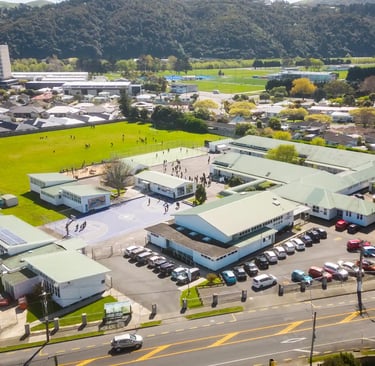
This guide helps Wellington schools, colleges, and education facilities evaluate and select cleaning providers based on compliance systems, safety standards, and evidence-based practices. It covers legal requirements, product safety considerations, quality control systems, and practical evaluation criteria.
What Makes School Cleaning Different
Schools aren't offices. They involve:
Vulnerable populations - Children with asthma, allergies, and varying health needs
Strict regulations - Children's Act 2014, Health and Safety at Work Act 2015, Ministry of Education standards
After-hours operations - Cleaning happens with minimal supervision
High-touch environments - Desks, door handles, and shared equipment touched constantly
Variable schedules - Term time, holidays, exams, and events require flexibility
A reliable provider and experienced school cleaners understand these differences and operate accordingly.
Legal Requirements You Must Verify
Children's Act 2014 - MOJ Vetting (Non-Negotiable)
Any cleaner working unsupervised in schools must have:
MOJ vetting (criminal record check)
Identity verification and work history review
Ongoing monitoring - Re-vetting every 2 years minimum
Training on appropriate conduct around children
What to ask: "Can you provide written confirmation that all staff assigned to our school are MOJ-vetted? When were they last vetted?"
Reputable providers maintain vetting registers and produce documentation immediately when requested.
Health and Safety at Work Act 2015
Schools and cleaning contractors are both PCBUs (Persons Conducting a Business or Undertaking) with shared obligations:
Contractor must provide:
Risk assessments for cleaning tasks
Safety Data Sheets (SDS) for all chemicals used
Appropriate PPE (Personal Protective Equipment)
Incident reporting procedures
School must ensure:
Contractors understand site-specific hazards
Safe access to cleaning areas
Monitoring of contractor compliance
Privacy Act 2020
Cleaners access student records, staff belongings, and confidential documents. Providers must:
Train staff on privacy obligations
Implement secure document disposal
Restrict access to sensitive areas
Maintain confidentiality agreements
Additionally, ensure providers meet employment obligations by complying with the school caretakers and cleaners collective agreement and paying correct school cleaners pay rates. Fair, transparent pay supports retention, training, and consistent quality in sensitive school environments.
Ministry of Education Compliance
Reliable providers should already know:
Teaching Space Standards:
Daily floor cleaning (vacuum/damp mop)
Desk and chair surface cleaning
Whiteboard cleaning
Bin emptying with liner replacement
Toilet Standards:
Daily sanitization of all surfaces
Disinfection of touch points (taps, door handles, flush buttons)
Soap and paper towel replenishment
Floor mopping with disinfectant
Food Area Standards:
Food Act 2014 compliance
Food-safe sanitizers
Separate cleaning equipment to prevent cross-contamination
Term vs Holiday Cleaning:
Daily maintenance during term
Deep cleans during holidays (carpet shampooing, floor sealing, window cleaning)
Adjusted schedules during exam periods
If a provider needs to be taught how schools operate, that's a red flag.
Product Safety in Student Environments
Classrooms contain students with asthma, allergies, and chemical sensitivities. Products must be:
Low VOC (Volatile Organic Compounds) - Reduces respiratory irritation
Fragrance-free or minimal fragrance - Prevents allergic reactions
Non-toxic - Safe if accidentally touched or ingested
Quick-drying - Prevents residue on desks and slip hazards
Critical questions:
"What products do you use in classrooms versus toilets?"
"Can you provide Safety Data Sheets for all products?"
"How do you handle requests to avoid certain chemicals?"
Professional providers can explain why they use certain products and demonstrate understanding of student health considerations.
After-Hours Access and Security
Most Wellington schools clean between 3:30 PM and 7:00 PM with minimal supervision.
Providers must have:
Secure key management with signed registers
Staff trained on your specific alarm system
Entry/exit logging systems (digital or manual)
24/7 emergency contact for security issues
Security protocols:
Procedures for securing all buildings after cleaning
Verification that windows and doors are locked
Reporting of security concerns (damaged locks, open windows)
Restrictions on personal phone use in sensitive areas
Schools should never need to supervise cleaners during operational hours.
Quality Control Systems That Work
Consistency is the biggest challenge in school cleaning and among school cleaners. Avoid providers who rely on trust alone.
Effective systems include:
Written task schedules - Specific checklists for each area (classrooms, toilets, common areas)
Supervisor inspections - Random daily checks, not just cleaner self-verification
Quality audits - Monthly formal audits with scored assessments
Issue tracking - Clear reporting when problems arise
Performance metrics - Completion rates, audit scores, issue resolution times
You should know:
Who supervises the on-site team
How quality is checked over time
Who to contact when something is missed
What happens if standards consistently slip
Summary
This guide explains how Wellington schools can select cleaning providers by prioritizing legal compliance (Children's Act MOJ vetting, Health and Safety at Work Act, Privacy Act) and Ministry of Education standards. It emphasizes school-specific risks, safe low-VOC products, robust after-hours security, and proven quality-control systems. Use the red flags and 20 essential questions to assess capability, factoring in Wellington's climate and school size when matching provider types. Make decisions via a structured evaluation and trial period, weighing overall value beyond price.
Red Flags - When to Walk Away
Be immediately cautious if a provider:
❌ Cannot clearly explain child safety procedures or produce vetting documentation
❌ Uses rotating casual staff without site familiarity or dedicated teams
❌ Has no written cleaning specifications - relies on verbal instructions only
❌ Treats schools like commercial offices - unfamiliar with Ministry of Education expectations
❌ Avoids documentation requests or gives vague answers about compliance
❌ Focuses only on price - significantly cheaper without explaining why
❌ Shows poor communication - slow responses, defensive about questions
❌ Has high staff turnover - frequent supervisor or team changes
Low cost never compensates for poor controls in school environments.
20 Essential Questions to Ask
Child Safety (Critical):
Can you provide police vetting certificates for all assigned staff?
What is your child safety policy and training process?
How often do you re-vet staff?
4. How many Wellington schools do you currently service?
5. Can you provide references from similar-sized schools?
6. How long have you specialized in education facilities?
Staffing:
7. Who specifically will be assigned to our school?
8. What is your annual staff turnover rate?
9. How do you handle staff absences?
Products & Safety:
10. What products do you use in classrooms, toilets, and food areas?
11. Are products suitable for asthma-sensitive environments?
12. Can you provide Safety Data Sheets immediately?
Operations:
13. How do you manage after-hours access and alarms?
14. What are your key management procedures?
15. How do you track entry and exit times?
Quality Assurance:
16. What inspection systems do you use?
17. How often are quality audits conducted?
18. How do you handle complaints or feedback?
Flexibility:
19. How do you adjust schedules for events and exams?
20. What is your response time for urgent cleaning needs?
Professional providers answer these questions calmly and specifically, with documentation readily available.
Wellington-Specific Considerations
Climate factors:
Wind and rain create higher entrance cleaning demands
Regular mat maintenance essential
Salt corrosion on coastal school windows
School type matters:
Small schools (<200 students) - May suit local providers with personalized service
Medium schools (200-500) - Need established systems and backup capacity
Large schools (500+) - Require providers with depth and resources
Provider types available:
National chains - Established systems, deep resources, higher cost
Regional providers - Wellington-focused, potentially more flexible
Specialist education cleaners - Best understanding of compliance, premium pricing
Small local operators - Competitive pricing, may lack backup systems
No single type is automatically best - match capabilities to your specific school cleaning services needs and risk tolerance.
Making the Decision: Process Over Promises
Evaluation framework:
Verify compliance first - Police vetting, insurance, Health & Safety documentation
Check systems - Written specifications, inspection processes, quality audits
Assess experience - References from similar Wellington schools
Review products - Safety data sheets, environmental certifications
Test communication - Response times, clarity, professionalism
Compare value - Not just price, but systems, reliability, support, and adherence to the school caretakers and cleaners collective agreement and fair school cleaners pay rates.
Consider a trial period:
3-6 month initial contract
Intensive monitoring during trial
Weekly feedback sessions
Formalize contract only after proven performance
Key Takeaways
✓ Compliance is non-negotiable - Police vetting, Health & Safety, Privacy Act
✓ Systems matter more than promises - Written specs, inspections, audits
✓ School-specific experience is essential - Ministry of Education knowledge, term scheduling
✓ Product safety affects student health - Low VOC, fragrance-free, certified products
✓ Quality control prevents decline - Supervisor checks, not just self-verification
✓ Security and access require protocols - Key management, alarm training, entry logs
✓ Price is one factor, not the only factor - Cheap providers often lack proper systems
Resources
Regulatory Bodies:
Ministry of Education: education.govt.nz
WorkSafe New Zealand: worksafe.govt.nz
NZ Police Vetting: police.govt.nz/advice-services/vetting
Key Legislation:
Children's Act 2014 (safety checking requirements)
Health and Safety at Work Act 2015
Privacy Act 2020
Education and Training Act 2020
Final Note: This guide provides general information for Wellington schools assessing cleaning providers. It reflects New Zealand regulatory requirements and Ministry of Education expectations as of January 2026. Schools should consult appropriate professionals for specific compliance or legal matters.
Looking for School Cleaning Services?
If you're searching for a Wellington school cleaning provider, visit our school cleaning services page to learn about our MOJ-vetted staff, Sensitive Choice certified products, and Ministry of Education compliance.
Frequently asked questions
Do school cleaning staff in New Zealand need to be police-checked?
Yes. Under the Children's Act 2014, all staff working in school environments must hold a current Ministry of Justice (MOJ) police vetting certificate. This is non-negotiable. Any cleaning provider unable to provide vetting documentation should be immediately disqualified.
What cleaning products are safe for use in Wellington schools?
Schools should require low-VOC, non-toxic products free from bleach, chlorine, and harsh chemicals. Sensitive Choice approved products are ideal as they are safe for children with asthma and allergies. Ask every provider for Safety Data Sheets (SDS) for all products used in classrooms, toilets, and food areas.
What quality control systems should a school cleaning provider have?
Effective systems include: written task schedules with checklists per area, random supervisor inspections, monthly formal quality audits with scored assessments, clear issue tracking, and defined performance metrics. You should know exactly who supervises on-site and who to contact if standards slip.
What are red flags when choosing a school cleaning provider?
Walk away if a provider cannot produce vetting documents, uses rotating casual staff, has no written cleaning specification, treats schools like standard commercial offices with no understanding of Ministry of Education requirements, avoids compliance questions, or offers a price significantly cheaper than others without explanation.
How should after-hours access work for school cleaning in Wellington?
The cleaning provider must have documented key management procedures, staff trained on your alarm system, and clear protocols for entry and exit time tracking. This protects the school from security risks and ensures accountability for all after-hours access.
What legal requirements apply to school cleaning companies in New Zealand?
School cleaning providers must comply with: the Children's Act 2014 (MOJ vetting for all staff), the Health and Safety at Work Act 2015 (hazardous substance management, safe work procedures), the Privacy Act 2020 (handling school information), and Ministry of Education guidelines for educational facilities.
Registered Office: Wellington, New Zealand
Commercial cleaning across Wellington, Lower Hutt, Upper Hutt, Porirua and Kāpiti.
Commercial Cleaning Wellington | Office Cleaning | Contact | Privacy Policy
Contact